How golf actually works in Japan — the full-day ritual, what a round costs, the seasons and regions that matter, dress code, and how international visitors get on courses that don't take English bookings.
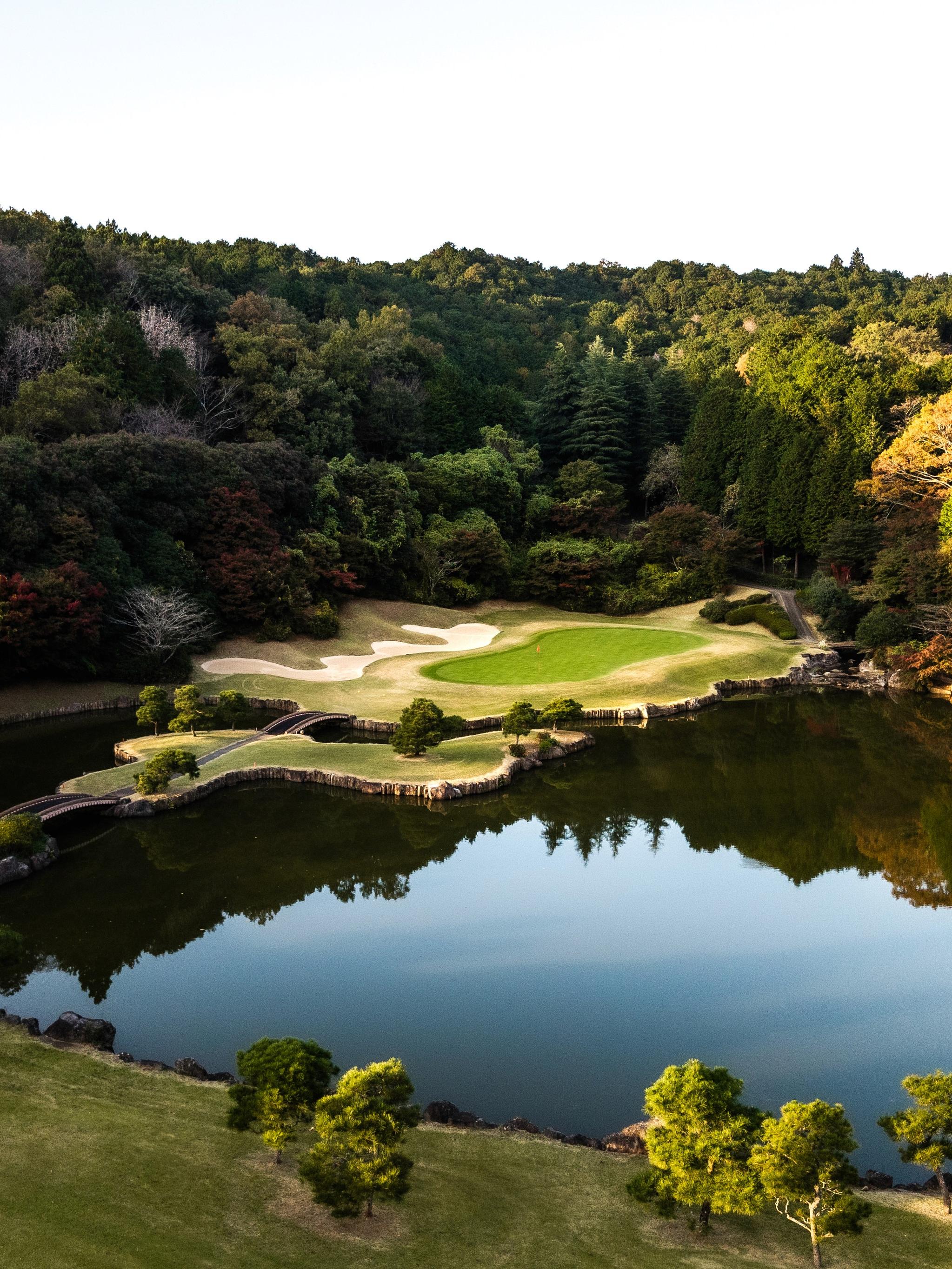
Japan has more than 2,000 golf courses — more than any country outside the United States and the United Kingdom. Courses laid out by Kinya Fujita and Seiichi Inoue in the 1930s, mountain layouts that stare straight at Mt. Fuji, seaside links over black volcanic sand. Almost none of it is reachable in English.
That gap — a country full of extraordinary golf that international players can see on the map but cannot book — is the single most important thing to understand before planning a golf trip to Japan. This guide covers how the game works here, what it costs, when and where to play, and how visitors actually get on the tee.
More than 2,000 courses. Almost none of them bookable in English.
What makes golf in Japan different
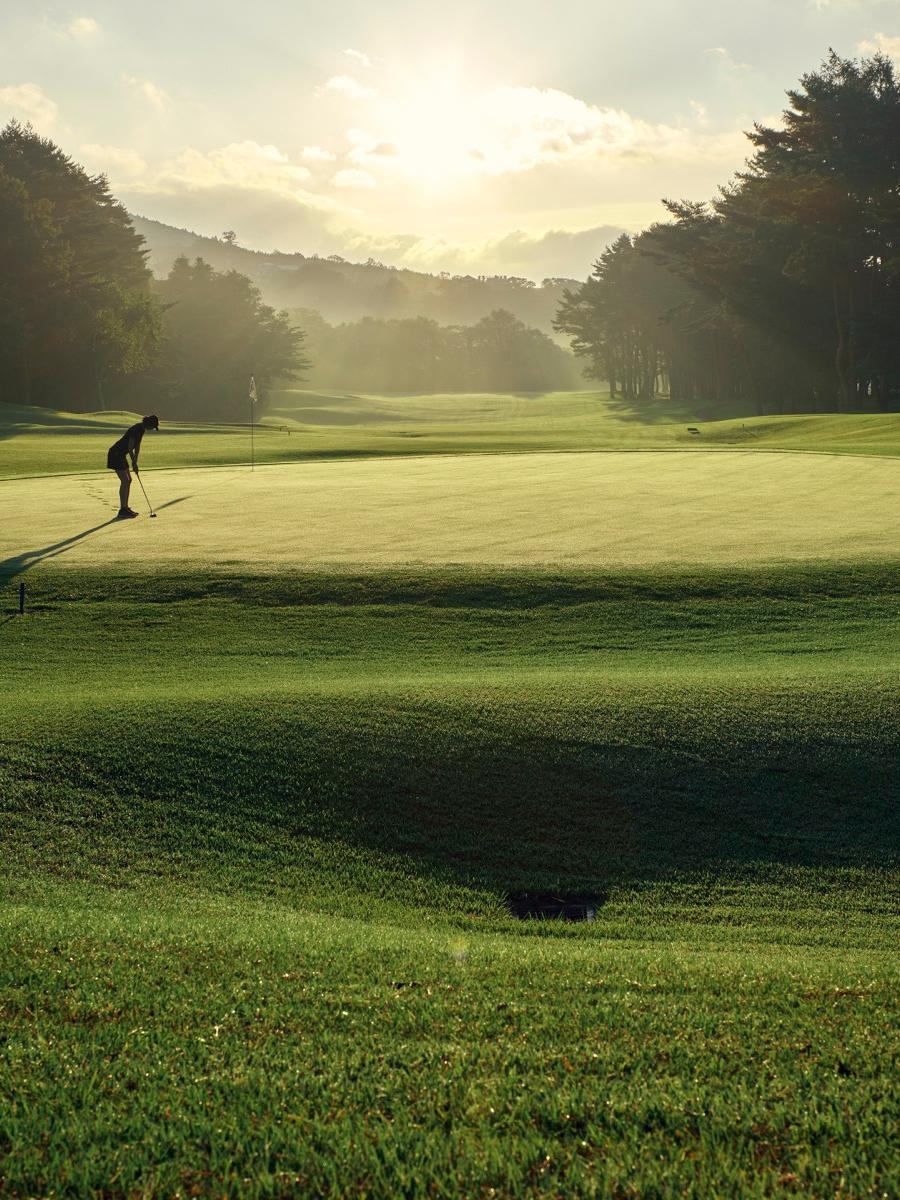
A round in Japan is a full-day ritual, not a two-hour errand. You arrive well before your tee time, check your bag with the porter, change in a locker room that would embarrass most hotels, and play the front nine. Then — at most traditional clubs — the round pauses: lunch in the clubhouse restaurant is part of the day, often 45 minutes of katsu curry or soba with your playing partners before the back nine.
After the round comes the ofuro — the communal bath. Soaking in a hot bath overlooking the eighteenth is as much a part of Japanese golf as the game itself. Many clubs still offer caddies (often forecaddies guiding the whole group), remote-controlled carts that follow the cart path on rails, and a level of course conditioning and hospitality that reflects the Japanese idea of omotenashi — anticipating a guest's needs before they are spoken.
The booking problem — and how visitors get on
Here is the honest picture. Japan's domestic booking portals are Japanese-only and most require a Japanese address or phone number. The country's most storied clubs are private and admit visitors only through a member's introduction. Even excellent public courses often take reservations only by phone, in Japanese. Hotel concierges can sometimes help with one or two well-known courses, but rarely know the courses worth traveling for.
Visitors who play the best golf in Japan almost always go through a specialist. PRESERVE exists for exactly this: we hold relationships with courses across the country — including member clubs that don't take direct visitor bookings — and handle the reservation, the transport plan and the day itself in English. You can browse every course we arrange or build a multi-course trip and we take it from there.
When to play: a season-by-season read
Spring (late March to May) and autumn (October to early December) are the prime seasons almost everywhere — settled weather, fast surfaces, and in spring, cherry blossoms lining the fairways. Summer is hot and humid across Honshu; committed golfers tee off early, but July and August are when Hokkaido becomes the best golf destination in Asia, playing firm and cool while Tokyo swelters.
Winter is underrated. Courses along the Pacific coast — Chiba, Shizuoka, Miyazaki in the far south — stay open and playable all year, with quiet tee sheets and winter rates. Mountain courses, including much of the Mt. Fuji area and Hokkaido, close under snow from roughly December to March.
Where to play: the regions that matter
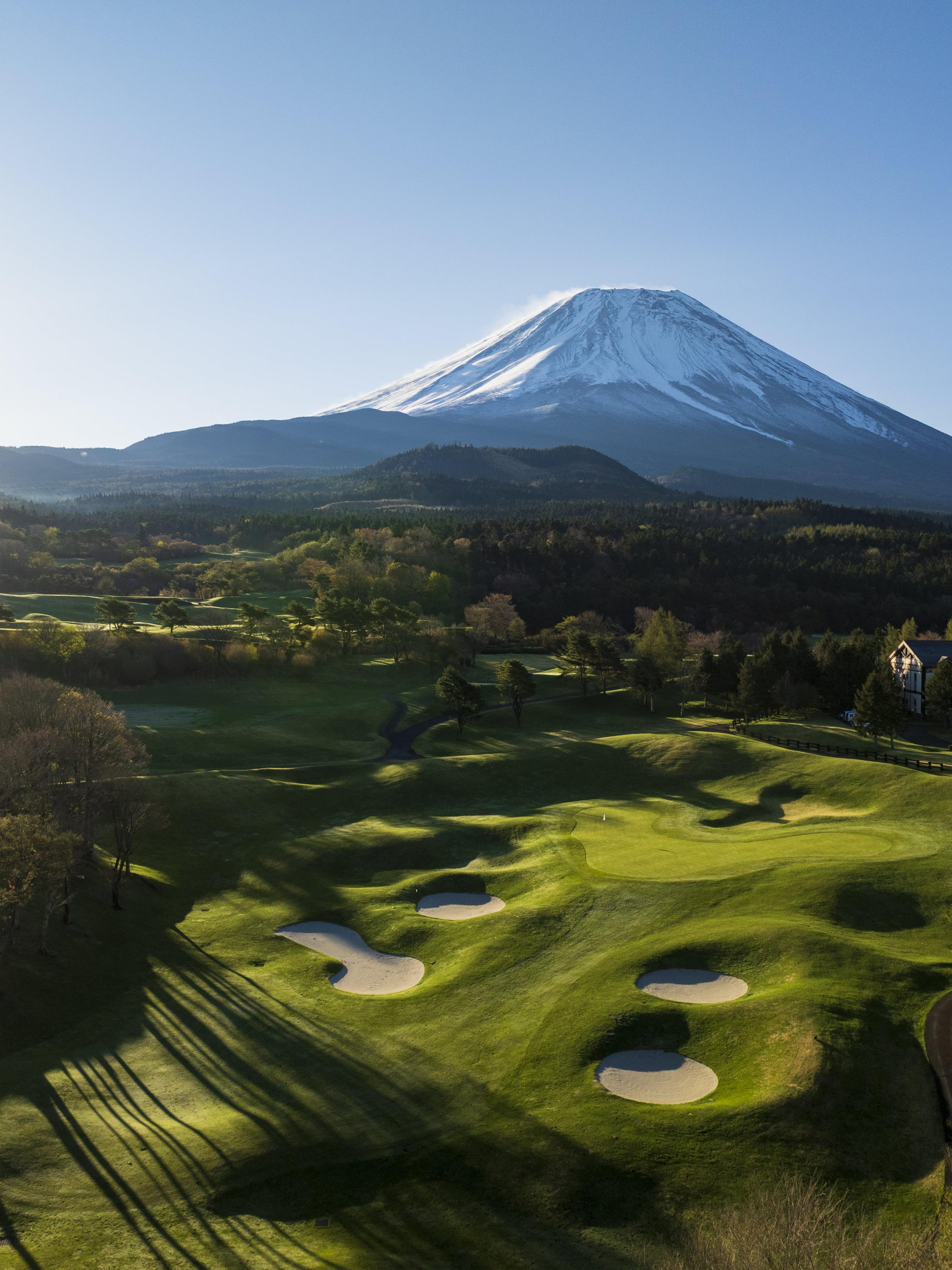
Around Mt. Fuji — Yamanashi and Shizuoka — sits the densest concentration of dramatic golf in the country, with layouts built around unobstructed views of the mountain. This is where we host most of our one-day tours from Tokyo.
Chiba, east of Tokyo around Narita, is the capital's golf belt: the highest concentration of quality courses within striking distance of the city, including several tournament venues. Hokkaido in summer is a different game altogether — bentgrass fairways, cool air, resort golf on a grand scale. And the deep south (Miyazaki, Kagoshima, Okinawa) offers warm rounds in January.
If you would rather not assemble the day yourself, our hosted tours and events run year-round from Tokyo — transport, pairings and the club's paperwork handled — and our private premium tours build the whole itinerary around you.
What a round costs
Green fees at good public courses typically run ¥10,000–¥25,000 on weekdays, with weekend rates 30–50% higher. Premier and tournament-grade courses run ¥25,000–¥50,000 and up. A caddie adds roughly ¥3,000–¥5,000 per player, and many clubs add a small twosome surcharge, since the standard Japanese playing unit is a foursome. Lunch is sometimes included in the posted fee — check, because a '¥14,800 with lunch' weekday deal is one of Japanese golf's great bargains.
Budget honestly for the day, not just the fee: transport to the countryside, club rental if you travel light, and the post-round meal are all part of the Japanese golf economy. A well-planned Tokyo-based golf day lands somewhere between a good dinner and a great one.
Dress code and etiquette essentials
Japanese clubs take presentation seriously. A collared shirt is universal; denim, cargo shorts and metal spikes are not welcome; and traditional clubs still expect a jacket when you walk through the front door — worth confirming before you go. Arrive at least 60 minutes before your tee time: the Japanese golf day has a rhythm, and being early is part of the courtesy.
On the course, the etiquette is familiar but observed with more care: keep pace (the lunch turn depends on it), rake bunkers thoroughly, repair pitch marks, and change into golf shoes in the locker room — never in the parking lot. Tipping is not expected anywhere. A bow and an arigatō to the caddie goes further.
Playing without Japanese
You do not need Japanese to play great golf in Japan — you need someone who has it. Course staff outside the international resorts rarely speak English, menus and scorecards are in Japanese, and the phone is still how much of the industry operates. Every booking PRESERVE arranges comes with bilingual support before and during the day, and our tour-grade rental clubs mean you can land in Tokyo with nothing but shoes and a glove.
The courses are there. The access is the craft. Tell us the trip you have in mind — dates, cities, how far you'll travel for a great course — and we will build the golf around it.