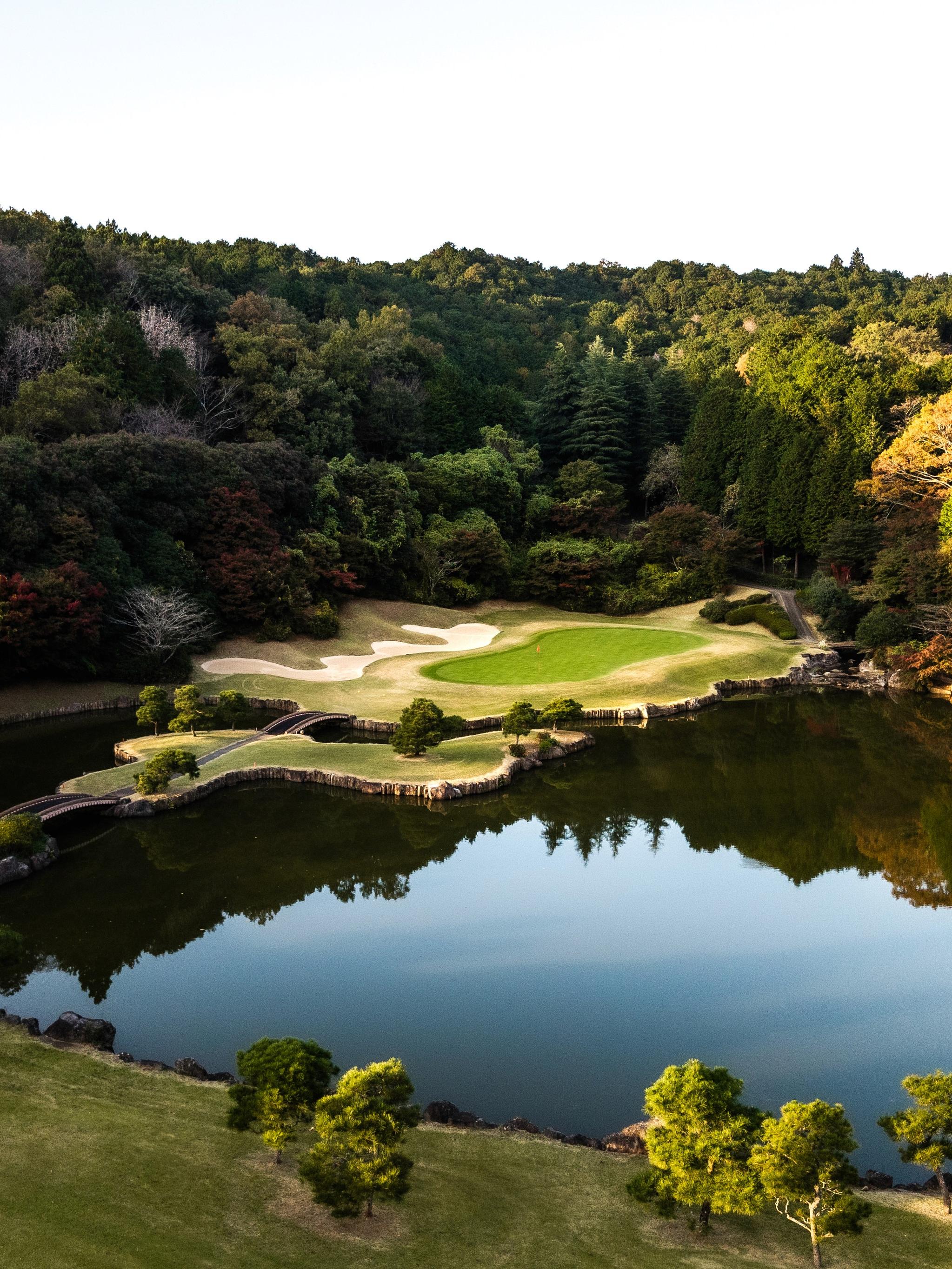
Japanese-only portals, foursome rules, member introductions — why booking golf in Japan is hard for visitors, and every real route onto a tee sheet, honestly compared.
Booking a round of golf in Japan should be simple. The country has more than 2,000 courses, most of them open to the public, and green fees that undercut comparable golf almost anywhere in the world. Yet ask a visiting golfer what the hardest shot in Japan is and the honest answer is the reservation. The domestic booking sites are Japanese-only. The best clubs don't take strangers at all. And the courses in between often live behind a phone number that answers in Japanese.
This guide is the complete picture: why booking is hard, every route onto a tee sheet, what a course actually needs from you, and what is realistic at the member-only clubs you've read about.
The hardest shot in Japanese golf is the reservation.
Why booking golf in Japan is hard from overseas
The first wall is language, and it is higher than it looks. Japan's golf booking economy runs on domestic portals and the telephone, and both assume Japanese. Course websites, when they exist, rarely have an English page, and the ones that do usually route you back to a Japanese form or a phone number. Email inquiries in English often simply go unanswered — not out of rudeness, but because nobody at the front desk is confident replying.
The second wall is structural. Japanese golf is built around the foursome: courses sell tee times as group slots, and many will not confirm fewer than two players at all. On weekends and holidays, plenty of clubs require a full four-ball — or attach a surcharge to smaller groups — because a half-empty slot is lost revenue on the busiest day of the week. A single traveler asking for a Saturday time is, at many courses, asking for something the system literally cannot sell.
The third wall is the membership tradition. Japan's most storied clubs are private in a way that predates online booking entirely: access flows through a member's introduction, sometimes with the member required to play alongside you. No website, no portal, no concierge hack changes that — more on what is realistically possible below.
Then come the details that catch people after the booking is made. Cancellation policies are real and enforced — most courses charge fees inside a window of roughly a week before play, and weekend slots are stricter, so a loosely planned itinerary can get expensive. Many traditional clubs pause the round for a sit-down lunch between nines, which changes your timing for the rest of the day. And you may be asked to choose between a caddie and self-play carts at booking time, not on arrival — a question that is hard to answer if you didn't know it was coming.
Every way to book, compared honestly
There are five routes onto a Japanese tee sheet. All of them work in the right situation; none of them works in every situation. Here is each one, with the honest trade-offs — including for the category we ourselves belong to.
Japan's domestic booking portals
Japan has big consumer booking portals with enormous inventory, real-time tee sheets, and the discounted weekday plans — often with lunch included — that make Japanese golf such a bargain for residents. That last word is the catch: they are built for residents.
The interfaces are Japanese (translation plugins get you partway, then fail at the payment or confirmation step), registration typically wants a Japanese mobile number and address, and the confirmation emails, change procedures and cancellation notices all arrive in Japanese. Travelers with a Japanese friend willing to hold the booking manage it. Travelers without one usually bounce off. Worth knowing: portal listings also skew toward the mid-market — the courses most worth traveling for are often thin or absent there.
Your hotel concierge
A good concierge at an international hotel in Tokyo or Osaka can absolutely get you a tee time, and it costs you nothing to ask. The limits are knowledge and reach: most concierges have two or three courses they always call — usually big, foreigner-friendly, unremarkable — and no relationships beyond them. They can rarely advise on which course suits your game, arrange English support on the day, or get anywhere near a club that requires an introduction. For a casual round on a free morning, fine. As the plan for the golf your trip is built around, it's a coin flip.
Contacting the course directly
Calling or emailing the course works better than most visitors expect — at the right courses. Resort courses and clubs near international destinations often have someone who handles English inquiries, and a polite email with your dates, player count and handicaps sometimes comes back with a confirmed time. But it is slow (days per round-trip), fails silently at courses with no English speaker, and leaves you managing the details — the caddie question, the lunch reservation, the cancellation terms — in a language you may not read. If you go this route, book far ahead and confirm everything in writing.
Walking on
Turning up without a booking is the weakest option in Japan. Courses plan staffing, caddies and the restaurant around the day's sheet, and a walk-up visitor — especially a single, especially one with no Japanese — puts the front desk in a position the system isn't designed for. On a quiet weekday at a rural course you might get lucky. As a strategy, don't. The one adjacent case that does work: staying at a golf resort, where hotel guests can usually add a round on-site for the next morning.
An English-language golf concierge
The final route is a specialist service that books on your behalf — and full disclosure, this is what PRESERVE is, so weigh this section accordingly. A good concierge holds direct relationships with courses, handles the reservation and every follow-up in Japanese, answers the caddie-or-cart and lunch questions with you in English, and can reach clubs that don't take direct visitor bookings through standing introductions. You pay for that — a concierge builds a margin or fee into the day, so the same tee time can cost more than a resident would pay booking domestically. What you're buying is certainty: the right course for your game, a booking that actually holds, and someone to call in English when the typhoon forecast moves.
If that trade reads as worth it, this is the part where we say: browse the courses we arrange — every course page has the green fees and access notes, and a booking inquiry starts right there.
How to actually book: step by step
Whichever route you choose, the course will want the same handful of things. Have them ready and every conversation gets shorter.
First, the essentials: your date (with a backup), preferred tee-time window, and exact player count — remember that twosomes may carry a surcharge and weekend slots may require four. Second, names as they appear on ID, and rough handicaps or playing experience; clubs hosting visitors on introduction often ask, and it helps any booker match you to a course you'll enjoy. Third, your choices: caddie or self-play cart, walking or riding, lunch at the turn or through-play where offered, and whether you need rental clubs — sizes and left/right if so. Fourth, a reachable contact: courses confirm changes by phone, so give whoever books for you a number that works in Japan, or make sure your concierge is the contact of record.
On timing: book as far ahead as your plans allow. Weekday times at most public courses can come together on short notice, but weekend and holiday slots at good courses fill weeks — in the spring and autumn peak, a month or more — ahead. Introduction-based clubs need the most runway of all, because a member or intermediary has to act on your behalf before anything is confirmed. As a rule of thumb: the more the course is worth traveling for, the earlier the booking needs to start.
On money: almost everywhere, you settle the whole day at the club — green fee, caddie, lunch, pro shop — in one bill at the front desk on the way out, and credit cards are widely accepted at golf courses even where rural Japan is still cash-fond. Expect weekday green fees at good public courses in the ¥10,000–¥25,000 range, 30–50% more on weekends, ¥25,000–¥50,000 and up at premier venues, and roughly ¥3,000–¥5,000 per player for a caddie. Some routes prepay online; concierge bookings vary by service. Whoever books, get the cancellation terms in writing — the fee windows are real, and weather cancellations have rules of their own.
Finally, reconfirm. Japanese courses run to a printed starting sheet, and a quiet confirmation a few days out — that the time stands, that the caddie is arranged, that your group size hasn't drifted — is normal practice, not nagging. It's also your moment to ask the questions that are awkward on arrival: is there a jacket rule in the clubhouse, is through-play possible in summer, can the restaurant handle a dietary restriction at the lunch turn. If a typhoon or heavy rain is in the forecast, ask how the course handles weather closures before the cancellation window closes on you, not after.
Before you go: the day-of checklist
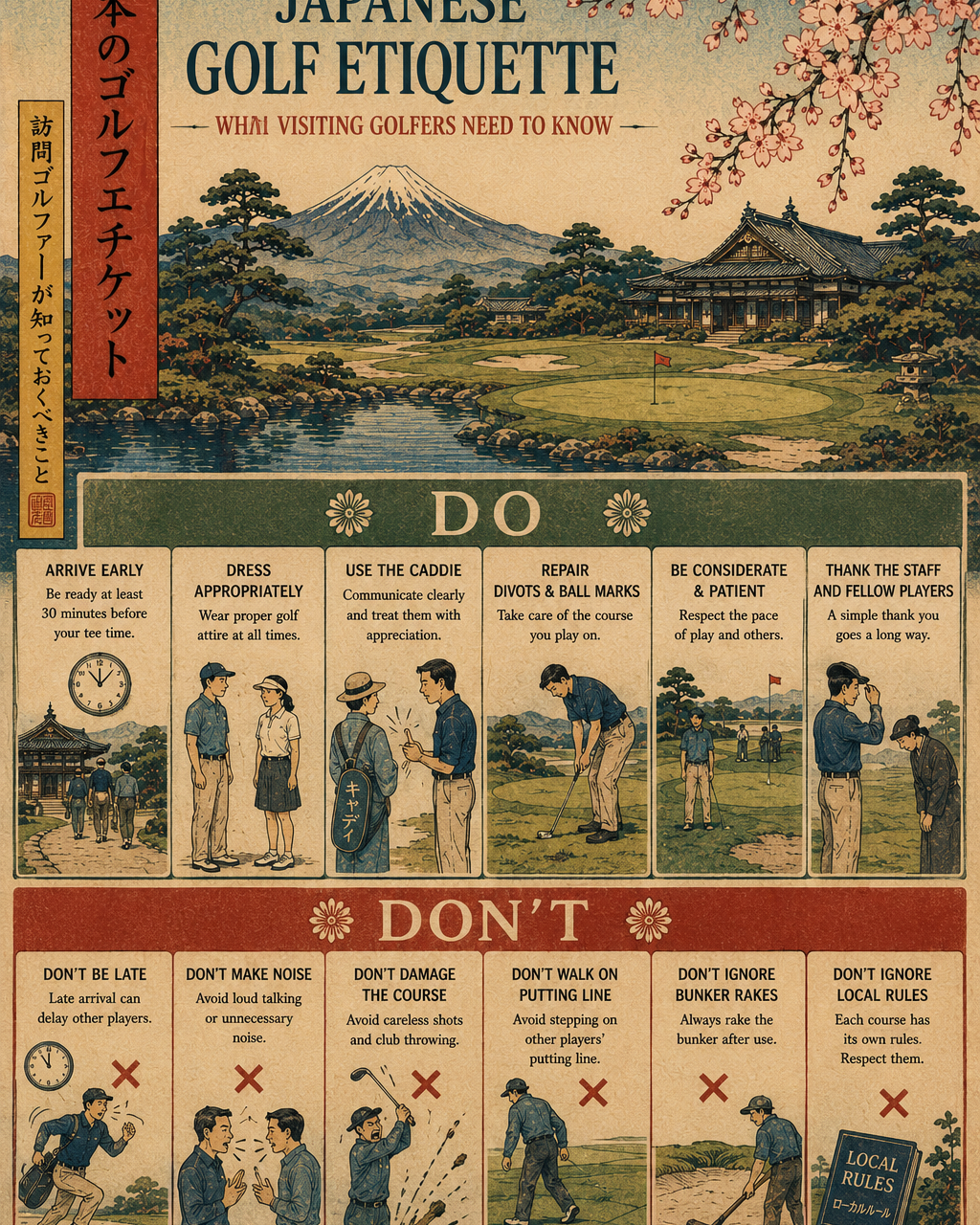
The booking gets you the tee time; the day still has a dress code — literally. Pack a collared shirt and tailored trousers or shorts (no denim anywhere on the property), soft-spike golf shoes you change into in the locker room, and — at traditional clubs — a jacket for walking through the front door, which is worth confirming when the booking is made. Arrive at least 60 minutes before your time, 90 at an old-line club: bag drop, check-in, changing and the range all have their place in the rhythm. There is no tipping — a bow and an arigatō to the caddie is the currency. The full unwritten rulebook, from the lunch turn to the bath, is in our Japanese golf etiquette guide.
Member-only clubs: Hirono, Kasumigaseki, Tokyo Golf Club
Now the question behind many of the emails we get: can a visitor play Japan's great private clubs — Hirono, Kasumigaseki, Tokyo Golf Club? The honest answer: sometimes, through an introduction, and never by filling in a form. These clubs admit unaccompanied visitors rarely or not at all; access flows from a member, a reciprocal club relationship, or an intermediary the club trusts, and the club sets conditions — weekday play, caddies, jacket in the clubhouse, sometimes a member present. No legitimate service can promise them on demand, and anyone who does is guessing with your itinerary.
What a visitor can do is start the introduction process early and have realistic expectations — our guide to playing a member-only course in Japan as a visitor walks through exactly how that works. And remember that Japan's bucket list is not all locked doors: world-class courses like Kawana's Fuji Course operate as resort golf you can book with a stay — we've written up booking Kawana, step by step. Between the truly private and the fully public sits a wide band of member clubs that welcome introduced guests — that band is where a concierge with standing relationships earns its keep.
Where to start, region by region
If you're booking your first trip, pick the region first and the course second — travel time from your hotel decides more of the day than the course ranking does.
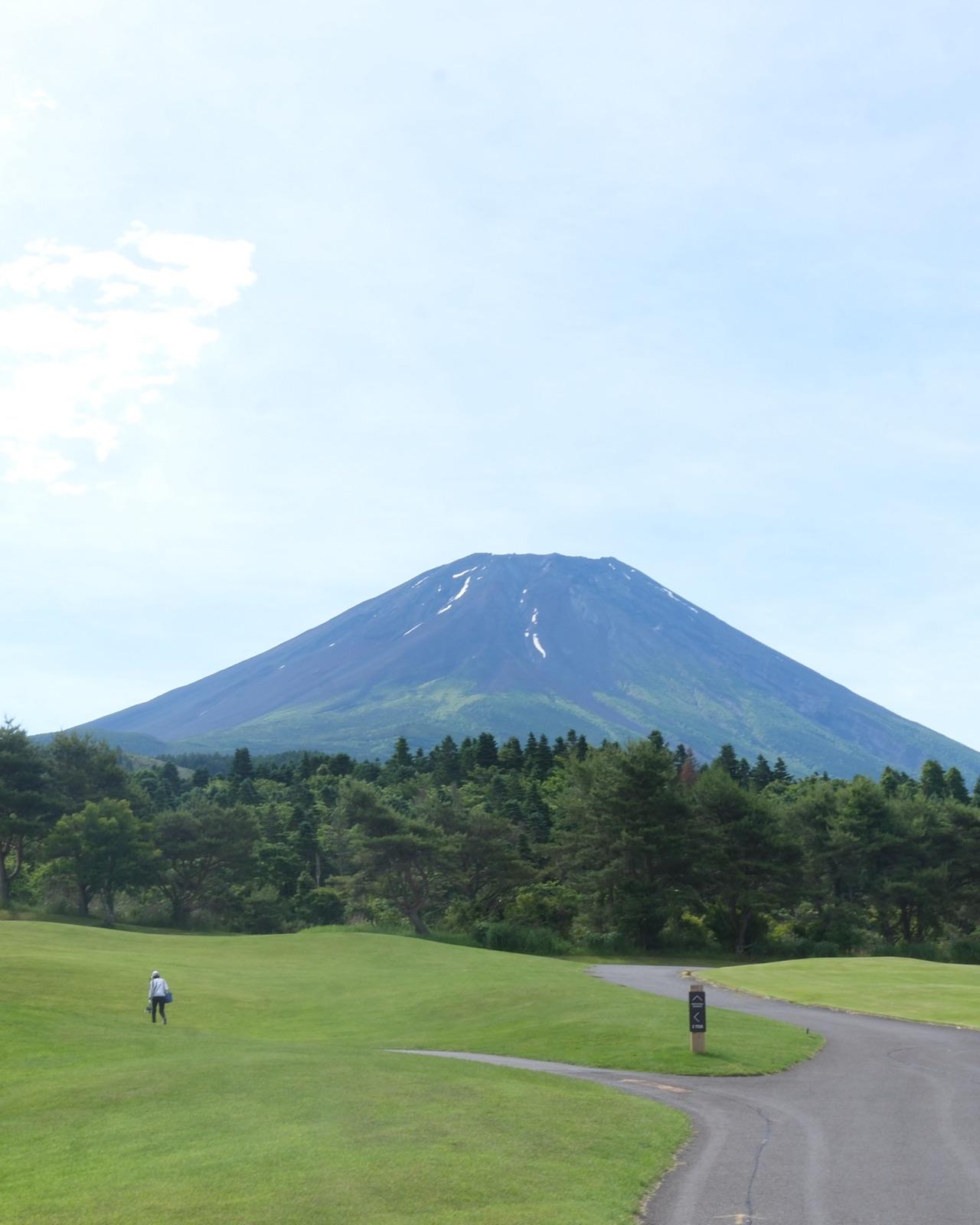
From Tokyo, Chiba is the capital's golf belt: the deepest concentration of quality courses within striking distance of the city, including tournament venues like Caledonian Golf Club. For drama, head for the Fuji foothills — Yamanashi and Shizuoka — where courses like Fuji Classic play in full view of the mountain, about two hours from the city. In summer, Hokkaido is the best golf destination in Asia — cool air, bentgrass fairways, and layouts like Hokkaido Classic — while Tokyo swelters. Each directory page maps every course we arrange in the prefecture.
Booking difficulty follows the same geography. Chiba and the Fuji area see international visitors constantly, so email inquiries and concierge bookings move quickly; Hokkaido's resort courses are used to hotel-package golf in summer but shut down under snow from roughly December to March, so the booking season is short and the good weeks go early. Wherever you land, the pattern holds: the further a course sits from the tourist trail, the better the golf often is — and the more the booking depends on someone who can pick up the phone in Japanese.
The short version
Japan's courses are open to you; the booking systems mostly aren't. If you read Japanese or travel with someone who does, the domestic sites are a bargain. If your trip has one great golf day in it and you'd rather it were certain, that is exactly what we do: book early, answer the caddie and lunch questions up front, respect the cancellation window, and pack a collared shirt — we'll handle the rest in Japanese.
When you're ready, browse every course we arrange and we'll confirm availability with the course directly — or if the shape of the whole trip is still open, tell us your dates and cities and we'll build the golf around them.